


Soğuk Pres Yağ Makinesi Fiyatları 2026
Temmuz 29, 2026Sanayi Tipi Soğuk Pres Yağ Makinası Fiyatları
Temmuz 30, 2026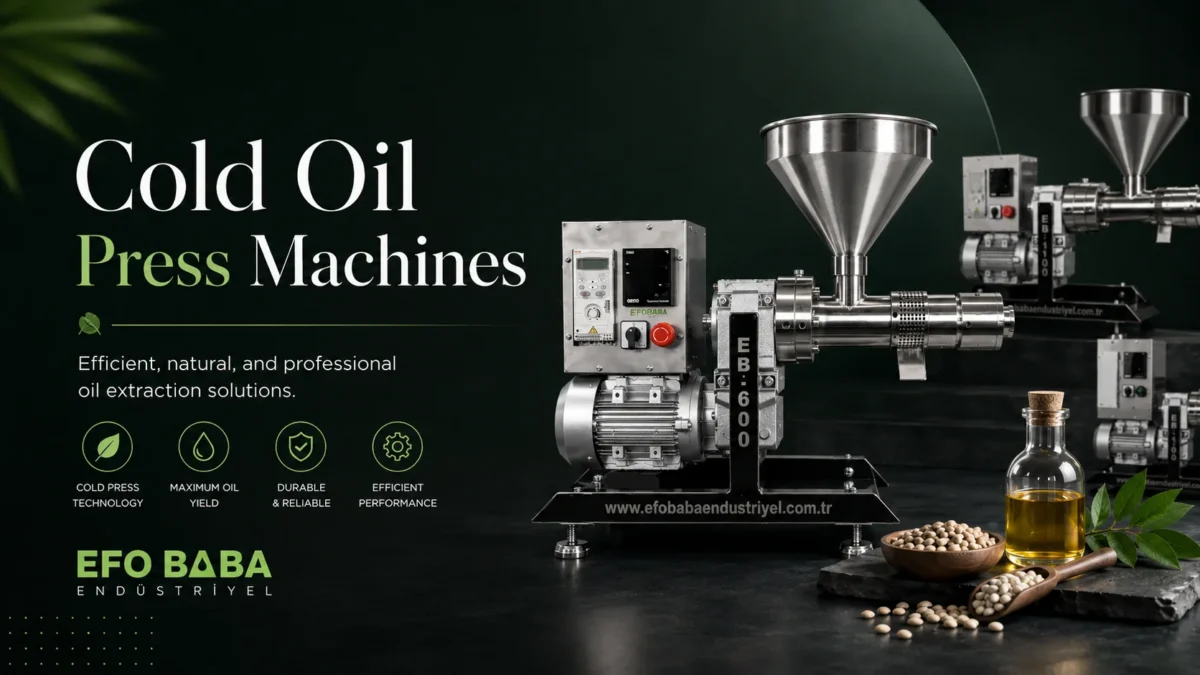
Cold Oil Press Machines: Commercial and Industrial Buying Guide
Cold oil press machines use controlled mechanical pressure to extract oil from seeds and nuts without chemical solvents or high-temperature refining.
This guide explains how screw presses work, how to compare production capacities, which raw materials can be processed, and how to select the right Efobaba model for a retail shop, growing oil brand, cooperative, or industrial facility.
What Are Cold Oil Press Machines?
Cold oil press machines are mechanical extraction systems designed to separate oil from oil-bearing seeds, kernels, and nuts. A rotating screw carries the raw material through a pressing chamber, where controlled compression releases the oil. The liquid exits through openings in the press barrel, while the solid material is discharged separately as press cake.
The word “cold” does not mean that no heat is generated. Friction naturally develops between the screw, pressing chamber, and raw material. Professional production therefore focuses on controlling feed rate, pressure, screw speed, and operating conditions so that unnecessary temperature rise is limited and the target product characteristics are maintained.
Unlike solvent-based extraction, a screw press does not require chemical solvents to separate the oil. This makes the technology suitable for businesses that want to produce traceable, mechanically extracted oils for food, cosmetic, personal-care, and specialty ingredient markets.
How Does a Cold Press Oil Machine Work?
A commercial screw press operates continuously. Clean raw material enters through the hopper and is transported forward by a specially designed screw. As the available space narrows, pressure increases and oil is released from the cells of the seed or nut.
Raw Material Preparation
Seeds are inspected and cleaned to remove dust, stones, metal fragments, stems, and other unwanted material.
Controlled Feeding
The hopper supplies the pressing chamber at a stable rate. Consistent feeding supports stable pressure and oil flow.
Mechanical Compression
The rotating screw compresses the raw material against the barrel and selected outlet nozzle.
Oil Separation
Crude oil drains through the press openings and is collected in a suitable stainless-steel container or tank.
Press Cake Discharge
Compressed solids leave through a separate outlet. Cake structure provides useful information about machine settings.
Settling and Filtration
The crude oil may be settled and filtered according to the desired clarity, market, and product specification.
Different materials behave differently inside the press. Sesame, black cumin, flaxseed, grape seed, walnut, and pumpkin seed do not require identical settings. Nozzle size, feed rate, moisture condition, and screw speed should therefore be selected according to the actual raw material.
Why Businesses Choose Mechanical Cold Pressing
Premium market potential
Mechanically extracted oils can support a transparent, traceable product story for gourmet food, natural cosmetics, and specialty markets.
Mechanical separation
The press separates oil through pressure rather than chemical solvent extraction, simplifying the core extraction process.
Multiple raw materials
One correctly configured press can process a broad range of seeds and nuts after cleaning and adjusting the machine.
Start small and expand
Businesses can begin with a compact unit and later add higher-capacity presses, filtration, tanks, and automated feeding systems.
Cold pressing is especially useful when the value of the final oil depends on aroma, color, origin, batch traceability, and a less intensive extraction process. However, the most profitable setup is not automatically the largest machine. It is the system that matches daily raw-material volume, sales demand, staffing, and downstream filtration capacity.
Types of Commercial Oil Press Equipment
Retail and boutique production
Compact presses are suitable for herbal shops, natural-product stores, laboratories, start-ups, and producers making small batches or changing raw materials frequently.
Growing commercial businesses
Medium-capacity machines support regular daily production for oil brands, farms, cooperatives, and contract manufacturers with an established customer base.
High-volume processing
Industrial systems use larger motors, three-phase power, heavier construction, and optional feeding or filtration equipment for continuous production.
Capacity should be based on efficient continuous operation rather than a short-term maximum figure. When comparing suppliers, ask which raw material was used for the capacity test, how long the machine maintained that rate, and what residual oil level remained in the cake.
Efobaba Cold Press Oil Machine Model Comparison
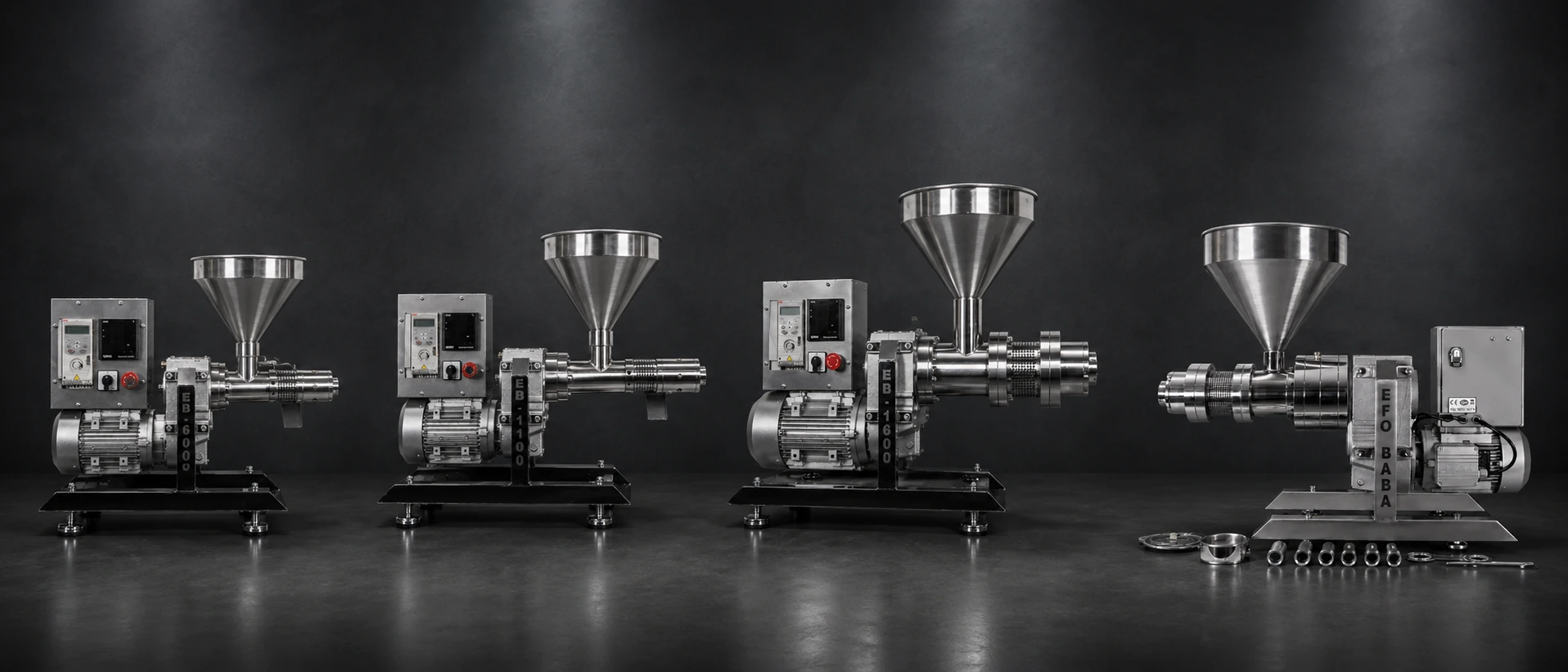
Efobaba offers four main standalone models for different production scales. The figures below show efficient processing ranges and should be evaluated together with the raw material, moisture level, machine settings, and operating conditions.
| Model | Efficient Processing Range | Power Supply | Typical Application | Best Fit |
|---|---|---|---|---|
| EB-600 | 3–5 kg/h | 220V, single phase | Small batches and frequent product changes | Shops, laboratories, start-ups, boutique brands |
| EB-1100 | 8–10 kg/h | 220V, single phase | Regular commercial production | Growing brands, farms, small cooperatives |
| EB-1600 | 13–15 kg/h | 220V, single phase | Higher daily production volumes | Professional producers and regional suppliers |
| EB-3100 | 25–30 kg/h | 380V, three phase | Industrial and high-volume processing | Factories, exporters, integrated facilities |
EB-600 for Compact and Boutique Oil Production
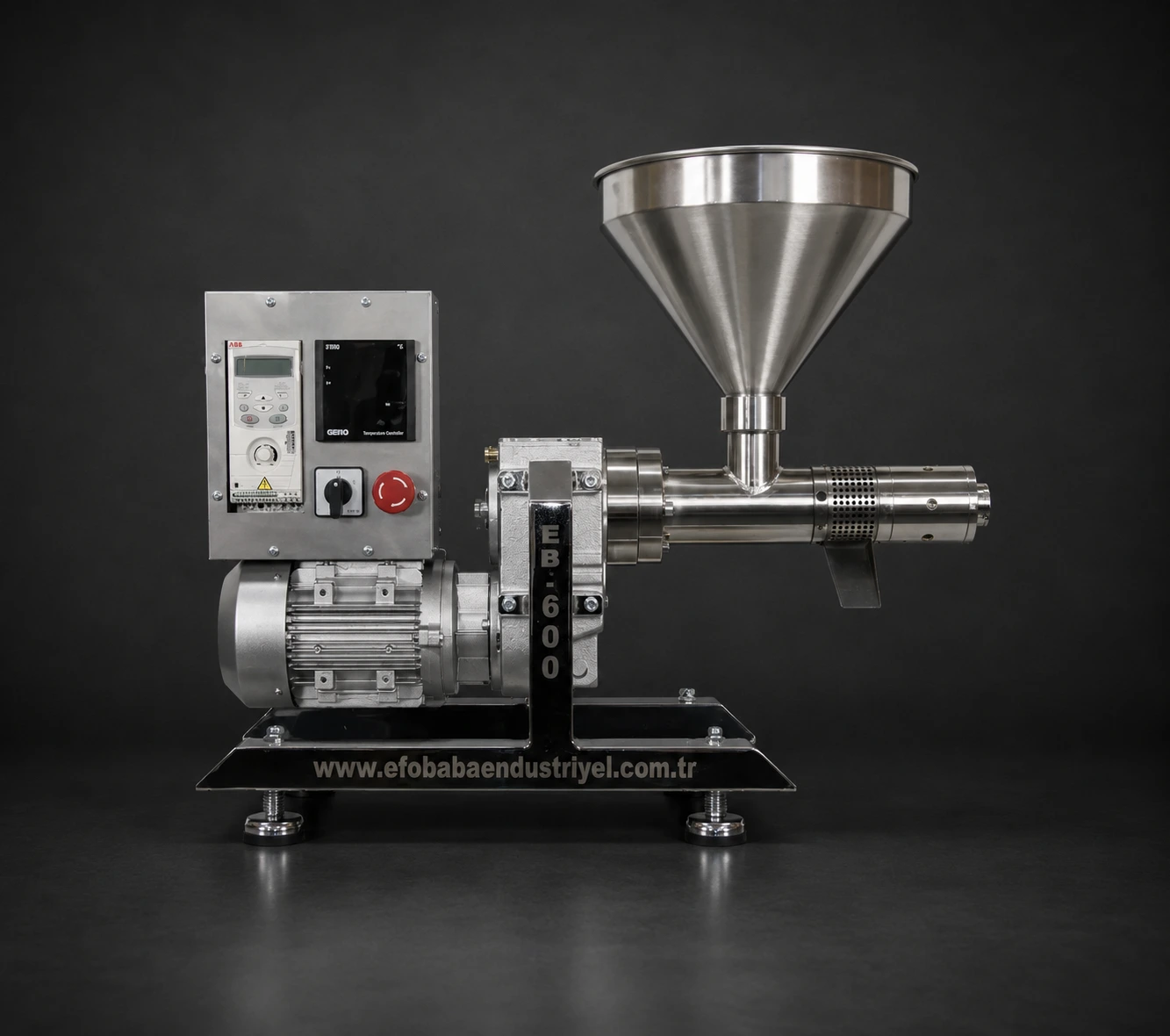
The EB-600 is designed for producers who need a compact commercial press without installing industrial three-phase infrastructure. Its efficient processing range of approximately 3–5 kg/h makes it suitable for shops, laboratories, start-ups, and businesses producing several oil varieties in controlled batches.
A small producer may use the machine for black cumin, sesame, flaxseed, safflower, almond, walnut, or pumpkin seed, provided that the material is properly prepared and the press is adjusted for the product. For businesses that switch between raw materials, cleaning time, easy access to the screw assembly, and spare nozzle availability are as important as hourly capacity.
The EB-600 is also useful for market validation. A new brand can test suppliers, calculate actual oil yield, establish filtration requirements, and measure customer demand before investing in a larger production line.
EB-3100 and Industrial Oil Processing
The EB-3100 is intended for higher-volume production and uses a 380V three-phase power supply. With an efficient processing range of approximately 25–30 kg/h, it can serve factories, exporters, cooperatives, and contract processors that require stable daily output.
Industrial performance depends on more than the press. If seed cleaning, feeding, oil storage, filtration, or filling cannot match the output of the machine, the slowest part of the line becomes the production bottleneck. Project design should therefore begin with the required daily throughput and work backward through every stage of the process.
Planning a High-Capacity Facility?
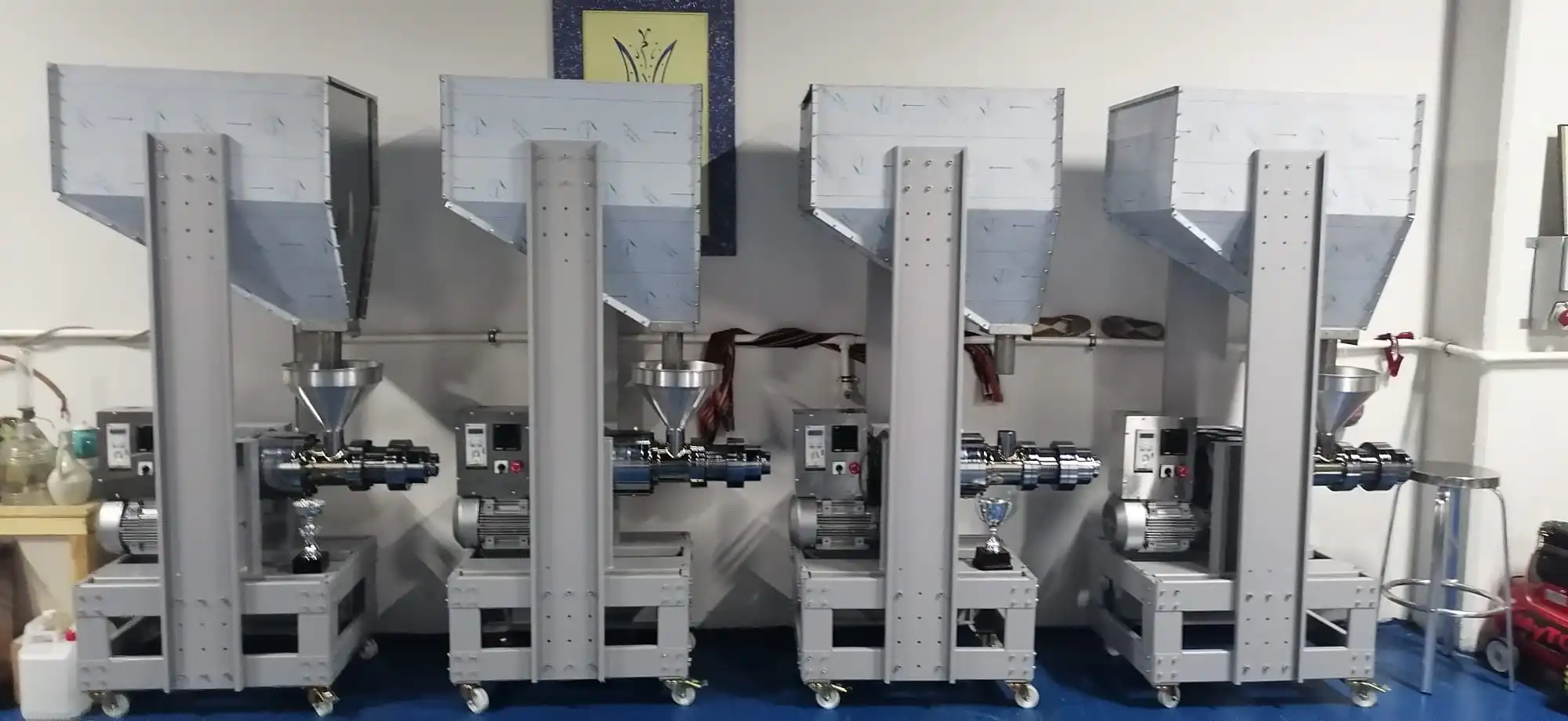
Efobaba can configure multi-machine installations with two, four, or more presses according to available space, electrical infrastructure, raw materials, daily targets, and automation requirements. Review the multi-system cold press production lines page for scalable plant solutions.
Which Seeds and Nuts Can Be Processed?
A commercial screw oil press can process many oil-bearing raw materials, but every material requires its own preparation and operating settings. The following products are commonly evaluated for mechanical pressing:
Black cumin and sesame
Popular for specialty food, natural-product, and regional export markets.
Flaxseed and safflower
Require consistent cleaning, moisture control, and stable feeding for repeatable batches.
Pumpkin and sunflower seed
Seed condition, shell content, and preparation influence oil flow and cake structure.
Walnut, almond, and hazelnut
Raw-material quality and particle size should be matched to the selected pressing process.
Grape and pomegranate seed
Harder materials place greater demands on torque, screw geometry, and outlet settings.
Hemp, chia, and moringa
Often used in premium food, cosmetic, or specialty ingredient applications.
Poppy and apricot kernel
Suitable machine settings should be established through sample tests before commercial production.
Customer-specific materials
Uncommon raw materials should be evaluated for feed behavior, oil yield, cake formation, and filtration needs.
How to Choose the Right Commercial Oil Press
The correct machine is not necessarily the lowest-priced or highest-capacity model. It is the press that can meet your real production target with acceptable oil yield, energy use, cleaning time, maintenance requirements, and product consistency.
Define your production target
- How many kilograms of raw material will be processed per day?
- How many operating hours and shifts are planned?
- Which seeds or nuts will represent most of the volume?
- How often will the operator change between products?
- What growth is expected during the next two or three years?
Check the complete operating environment
- Is single-phase or three-phase power available?
- Is there enough space for raw material, pressing, and oil tanks?
- Can the filtration system process the oil at the same rate?
- Are spare parts and technical support available?
- Can the machine be cleaned quickly and safely?
| Selection Criterion | Question to Ask | Why It Matters |
|---|---|---|
| Efficient throughput | What raw material was used for the continuous capacity test? | Short-term maximum output may not represent daily production. |
| Residual oil in cake | How much oil remains after pressing under normal settings? | Residual oil is a direct raw-material cost. |
| Motor and gearbox | Can the drive system maintain stable torque on hard seeds? | Stable torque supports consistent feeding and reduces stoppages. |
| Food-contact materials | Which components contact the raw material and oil? | Material selection affects hygiene, corrosion resistance, and cleaning. |
| Cleaning access | How long does screw and press-head cleaning take? | Cleaning time reduces available production time. |
| Service support | Which parts are stocked and how quickly can support be provided? | Production downtime can cost more than the original price difference. |
From a Standalone Press to a Complete Oil Production Line
A standalone machine is sufficient for many small businesses, but larger projects require a coordinated line. The press should be integrated with equipment that prepares the raw material, stores the crude oil, removes suspended solids, and fills the final product.
Seed cleaning
Screening, aspiration, stone separation, and metal control protect product quality and reduce mechanical wear.
Feeding and storage
Hoppers, silos, and controlled feeding systems maintain a stable supply to one or more presses.
Oil collection
Food-contact tanks allow crude oil to be collected, settled, sampled, and transferred safely.
Filtration
Filter selection depends on oil flow, suspended solids, desired clarity, and production schedule.
Cake handling
Press cake can be collected, conveyed, stored, or evaluated for an appropriate permitted use.
Filling and packaging
The filling line must match the press and filtration output to prevent bottlenecks.
For international project planning, quality documentation and production certificates may also be important. Efobaba’s available documentation can be reviewed on the quality and safety certificates page.
Cleaning, Maintenance, and Product Changeover
Preventive maintenance protects machine performance and helps batches remain consistent. Daily product-contact cleaning and periodic technical inspection should be treated as separate tasks.
| Component | Recommended Check | Purpose |
|---|---|---|
| Screw and press head | Clean after production and before a sensitive product change | Reduces blockage, odor transfer, and hardened cake deposits. |
| Nozzles and oil outlets | Inspect daily | Maintains stable cake discharge and oil flow. |
| Motor and gearbox | Check periodically for noise, vibration, and leakage | Supports early detection of mechanical problems. |
| Electrical system | Inspect according to the maintenance plan | Supports safe operation and stable power delivery. |
| Fasteners and frame | Check after installation and at planned intervals | Prevents vibration-related loosening and alignment problems. |
Machine Cost, Operating Cost, and Return on Investment
The purchase price is only one part of the investment. A realistic budget should include delivery, installation, electrical work, raw-material cleaning, tanks, filtration, filling, packaging, staff, spare parts, and working capital.
Factors that improve payback
- Stable raw-material supply at a controlled cost
- A machine sized for actual demand
- Low residual oil loss in the cake
- Efficient cleaning and product changeover
- A reliable retail, wholesale, or export channel
- Useful management of press cake and by-products
Factors that delay payback
- Buying more capacity than the market requires
- Inconsistent or low-quality raw material
- Frequent stoppages and unavailable spare parts
- Filtration or filling systems that limit press output
- High packaging and distribution costs
- Calculating profit from theoretical yield only
Before ordering equipment, calculate low, normal, and high sales scenarios. Use net saleable oil after settling and filtration—not only crude oil at the press outlet. This produces a more reliable estimate of cost per bottle and investment payback.
Common Buying Mistakes to Avoid
Choosing only by price
A low purchase price may be offset by high cake losses, frequent stoppages, difficult cleaning, or unavailable spare parts.
Using maximum capacity as the only measure
Ask for efficient continuous output on the raw material you plan to process.
Ignoring filtration capacity
If the filter cannot match press output, crude oil accumulates and the whole line slows down.
Skipping a sample test
A trial with your material reveals actual throughput, oil flow, cake structure, and filtration needs.
Underestimating changeover time
Businesses processing many seeds should compare cleaning access and time between products.
Not planning future growth
Select a model that meets current demand without becoming a bottleneck after a modest increase in sales.
Frequently Asked Questions About Cold Oil Press Machines
What is a cold oil press machine?
It is a mechanical screw press that separates oil from seeds, kernels, or nuts through controlled compression rather than chemical solvent extraction.
Does cold pressing generate any heat?
Yes. Mechanical friction naturally creates heat. Professional operation focuses on controlling the process so unnecessary temperature rise is limited and the desired product characteristics are maintained.
Which Efobaba model is suitable for a small shop?
The EB-600 is commonly evaluated for compact commercial use because it operates on 220V single-phase power and offers an efficient processing range of approximately 3–5 kg/h.
Which model is suitable for industrial production?
The EB-3100 is designed for higher-volume processing, with an efficient range of approximately 25–30 kg/h and a 380V three-phase power supply. Multi-machine lines can be configured for larger projects.
Can one machine process different seeds?
Yes. A properly configured press can process many oil-bearing materials, but each product may require different cleaning, moisture condition, nozzle, feed rate, and operating settings.
Is filtration always required?
Crude press oil normally contains fine suspended particles. Settling or filtration may be used according to the desired clarity, production standard, and target market.
How should machine capacity be compared?
Compare efficient continuous throughput on your main raw material, not only the maximum short-term figure. Also review residual oil in cake, energy consumption, cleaning time, and service support.
Why is a sample pressing test important?
A trial with your actual raw material provides the most useful information about output, oil yield, cake condition, operating settings, and filtration requirements.
What equipment is needed besides the press?
Depending on scale, a project may require seed cleaning, hoppers or silos, oil tanks, filtration, cake handling, filling, packaging, and suitable electrical infrastructure.
How often should the machine be cleaned?
Product-contact components should be cleaned according to the raw material, production schedule, and hygiene plan. Cleaning is especially important when changing between different oils.
What determines the price of a commercial oil press?
Price depends on capacity, motor and gearbox, press construction, food-contact materials, electrical system, automation, included accessories, installation, warranty, and project scope.
How can I request the correct machine quotation?
Share your main raw materials, daily input target, operating hours, available power supply, destination country, and any filtration or automation requirements.
Build the Right Oil Pressing System for Your Business
Tell us which seeds or nuts you plan to process, your required daily capacity, available power supply, and destination country. Efobaba can recommend a standalone press or a scalable production-line configuration for your project.
Explore more English resources in the Efobaba Industrial knowledge center or visit the global Efobaba website.
